

Flexible duct performance depends on more than the materials used in the finished product. The way the material is fed, tensioned, formed, reinforced, and joined during production can have a direct effect on how well the finished duct bends, retains its shape, and performs during installation. For manufacturers, this makes machine control an important part of maintaining consistent duct quality.
A suitable flexible duct machine needs to do more than form the duct into the required configuration. It must handle the material without creating unnecessary deformation, maintain stable tension throughout production, and keep forming and reinforcement conditions consistent. The same principles apply when a ventilation duct machine is used for different duct constructions: machine settings need to match the material and product rather than relying on one fixed production setup.
The forming performance of a flexible duct machine is determined by how well several parts of the production process work together. Material feeding, tension control, forming components, reinforcement positioning, and seam formation can all influence the final duct structure.
Stable feeding is particularly important because flexible duct materials can respond differently to tension and movement than rigid sheet metal. Excessive pulling can stretch or distort the material, while insufficient control may cause uneven feeding and inconsistent forming. Either condition can make it more difficult to maintain a uniform duct shape.
The machine's mechanical structure also matters. Components that guide and form the material need to maintain their position during continuous operation. If the material path changes during production, even small variations can affect the shape and consistency of the finished duct.
For this reason, manufacturers evaluating a flexible duct machine should consider the complete forming process rather than focusing on production speed alone. A machine that provides stable material handling and adjustable forming conditions is more suitable for manufacturers working with different flexible duct constructions.
Material feeding is one of the first stages where forming quality can be affected. Flexible duct materials may include coated fabrics, films, insulation-related layers, wire reinforcement, or other components, depending on the duct construction. These materials need to move through the machine at a controlled and consistent rate.
Tension is particularly important. If tension changes during production, the material can shift relative to the forming components or reinforcement. This can lead to variations in diameter, spacing, surface condition, or overall flexibility. Consistent tension helps the machine maintain a predictable relationship between the incoming material and the forming process.
A well-configured ventilation duct machine should therefore provide appropriate control over material movement. Feeding components should guide the material without creating unnecessary friction or deformation, while the operating parameters should be adjustable for different material characteristics.
Material consistency also affects the result. Differences in thickness, coating, stiffness, or surface condition can change how the material responds during forming. Even when the machine is correctly adjusted, inconsistent raw material can make it difficult to achieve uniform production. Machine capability and material quality consequently need to be considered together.
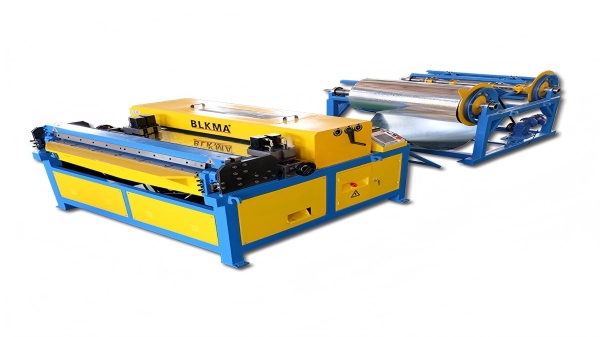
Forming accuracy has a direct relationship with how a flexible duct behaves after it leaves the machine. The finished duct needs to maintain its intended structure while still allowing the degree of flexibility required for installation and operation.
If forming is inconsistent, some sections may become tighter or looser than others. Such variation can affect how the duct bends and how easily it can be positioned during installation. In applications where ducts need to pass through confined spaces or around obstacles, predictable flexibility can be just as important as the ability to maintain the nominal duct shape.
This makes repeatability an important characteristic of a flexible duct machine. The objective is not to make every section excessively rigid or tightly formed. Instead, the forming process should create a consistent structure that provides the intended balance between flexibility, dimensional stability, and mechanical integrity.
Operators should also be able to make controlled adjustments when changing duct specifications. Different diameters, materials, reinforcement configurations, or construction methods may require different forming conditions. A machine with appropriate adjustment capability allows manufacturers to maintain consistent results across different production requirements.
Reinforcement is an important part of many flexible duct constructions because it contributes to structural stability while allowing the duct to bend. The way reinforcement is positioned and integrated during production can therefore affect both flexibility and finished-product consistency.
If reinforcement is not positioned consistently, the finished duct may behave differently from one section to another. Irregular spacing or unstable positioning can also affect the appearance and mechanical behavior of the duct. For manufacturers, maintaining a consistent relationship between reinforcement and the surrounding material is therefore an important part of process control.
Seam quality requires similar attention. A seam that is too weak may reduce product durability, while excessive forming or joining pressure can affect flexibility around the seam. The appropriate conditions depend on the materials and construction method being used.
A ventilation duct machine used for flexible duct production should therefore be evaluated according to how effectively it controls these connected processes. Stable reinforcement handling and consistent seam formation help create a more uniform finished product and reduce the need for manual correction.
| Production factor | Potential quality issue | What manufacturers should control |
|---|---|---|
| Material feeding | Uneven movement or material deformation | Feeding stability and material path |
| Tension control | Variation in duct shape or flexibility | Consistent tension throughout forming |
| Forming accuracy | Inconsistent dimensions or shape retention | Forming position and repeatability |
| Reinforcement positioning | Uneven flexibility or structural inconsistency | Stable reinforcement placement |
| Seam formation | Weak or overly rigid joining areas | Appropriate joining conditions for the material |
Not all flexible ducts are constructed in the same way, so a single machine setting cannot necessarily deliver the same result across every product. Differences in material, reinforcement, diameter, layer structure, and joining method can change the way the duct responds during forming.
For example, a construction using a relatively flexible material may require different handling conditions from one incorporating a stiffer layer or heavier reinforcement. The machine needs to accommodate these differences without introducing unnecessary stress into the material.
This is where adjustment flexibility becomes particularly valuable. Operators should be able to modify relevant production conditions when changing products rather than compensating for differences through repeated manual correction after forming.
Manufacturers should also consider how easily the machine can return to a proven setup. When the same duct specification is produced repeatedly, being able to reproduce appropriate operating conditions can reduce variation between production batches.
For manufacturers evaluating equipment, the BLKMA product range provides an opportunity to review duct manufacturing equipment and consider how different machine configurations may fit into their broader ventilation production processes. The appropriate configuration should always be assessed against the actual materials and duct constructions being produced.
Flexibility and consistency are sometimes treated as opposing goals, but a controlled forming process should allow manufacturers to achieve both. The purpose of flexible duct forming is not simply to make the product as soft or bendable as possible. The finished duct needs enough flexibility for installation while retaining the structural characteristics required by its application.
This balance depends on controlled material handling throughout production. Excessive tension, inconsistent reinforcement, unstable forming, or inappropriate seam conditions can all change how the finished duct behaves. Once these factors are controlled, manufacturers have a better basis for producing ducts with predictable characteristics.
A flexible duct machine can contribute to this consistency by reducing variation between production cycles. Stable feeding and forming conditions make it easier to maintain similar product characteristics from one batch to another, particularly when production volumes increase.
The same principle applies when selecting a ventilation duct machine. Manufacturers should consider not only whether a machine can produce the required duct configuration, but also whether it can maintain consistent results when materials, sizes, and production conditions change.
Machine maintenance should not be overlooked either. Forming and feeding components can gradually change in condition through normal use. Keeping the machine properly maintained helps preserve the operating conditions on which consistent forming depends.
For manufacturers planning a new production line or reviewing an existing process, the most useful approach is to evaluate the relationship between machine configuration and product requirements. Companies with specific flexible duct production requirements can contact BLKMA to discuss the materials, duct constructions, and production conditions they need to handle.
The flexibility and forming quality of a finished duct are closely connected to the conditions under which it is manufactured. Material feeding, tension control, forming accuracy, reinforcement positioning, and seam quality all influence how consistently the final product performs.
A suitable flexible duct machine should therefore provide more than basic forming capability. It should give manufacturers sufficient control to work with the intended materials and duct constructions while maintaining stable production conditions. When these factors are properly matched, manufacturers can produce ducts with more predictable flexibility, shape retention, and overall consistency.
When comparing a ventilation duct machine or flexible duct production equipment, manufacturers should look at the complete forming process rather than a single machine specification. Material handling, adjustment flexibility, reinforcement control, forming repeatability, and long-term machine stability all contribute to the quality of the finished duct.
Material feeding, tension, forming conditions, reinforcement positioning, and seam formation can all influence the flexibility and structural consistency of the finished duct.
Stable tension helps prevent uneven feeding, material distortion, and variations in duct shape during continuous production.
Yes. Consistent forming helps the duct maintain predictable dimensions and flexibility while reducing variation between different production sections.
Consistent reinforcement positioning helps maintain structural stability and predictable flexibility throughout the finished duct.
That depends on the machine configuration and adjustment range. Different materials, reinforcement structures, and duct specifications may require different operating conditions.
They should consider material compatibility, duct specifications, forming accuracy, tension control, reinforcement handling, adjustment flexibility, production volume, and machine stability.

 Call us on:
  Email us:
  Dongcheng Industrial park, Bowang District of
FREE QUOTE
Dongcheng Industrial park, Bowang District of
FREE QUOTE
 English
 한국어
한국어 Deutsch
 Español
 italiano
 العربية
 Polska
 Svenska
 українська
 Malay
Malay