

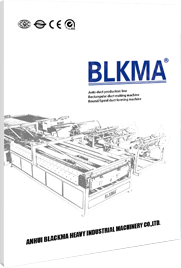
In spiral duct manufacturing, material efficiency is closely tied to production efficiency. The amount of sheet metal used for a duct is only part of the picture. Material quality, sheet preparation, forming accuracy, machine settings, production speed, and the amount of scrap generated during production all affect the actual cost and output of a manufacturing process.
For this reason, improving material utilization does not simply mean reducing offcuts. A more effective approach is to make the entire production process more consistent, from selecting suitable sheet material to maintaining stable forming conditions on the spiral duct machine. When these factors work together, manufacturers can improve usable output without relying on higher material consumption or unnecessarily aggressive production speeds.
The material used for spiral duct production has a direct influence on how efficiently it can be processed. Galvanized steel is widely used in duct manufacturing, while stainless steel and aluminum may be selected for applications with different corrosion resistance, weight, or environmental requirements. Each material behaves differently during feeding and forming, particularly when thickness and mechanical properties change.
A material specification that works well for one duct application may not produce the same results in another. Thickness, surface condition, flatness, and consistency can all influence how smoothly the material passes through the forming process. If the material is difficult to feed or requires frequent machine adjustments, production losses can appear as setup waste, defective sections, or additional rework.
This is why material compatibility should be considered when selecting a spiral duct machine. The equipment needs to accommodate the materials and thickness ranges used in the manufacturer's actual production environment rather than being evaluated only by its maximum nominal capacity.
Experienced spiral duct machine manufacturers can also provide useful guidance on matching machine configuration with the intended material range. This becomes particularly important for manufacturers producing different duct diameters or switching between materials for different projects.
Material waste can often be traced back to the preparation stage rather than the forming process itself. If sheet width and strip dimensions are poorly matched to the required duct specifications, usable material can be left over before production even begins.
For coil-fed production, manufacturers can improve utilization by planning material dimensions around the products that will be produced during a given production run. Grouping compatible orders can also reduce unnecessary changes in material size and help make better use of available coil or sheet material.
Cutting accuracy is equally important. A strip that is wider or narrower than required may affect both material consumption and forming stability. Consistent strip dimensions give the spiral duct machine a more predictable input, which helps maintain uniform forming conditions throughout the production process.
It is also useful to distinguish between different types of material loss. Offcuts caused by sheet preparation are different from scrap caused by incorrect machine settings, while defective sections caused by quality problems may indicate a completely different issue. Tracking these losses separately makes it easier to identify where improvements will have the greatest practical effect.
A spiral duct machine does not operate independently of the material being processed. Feeding conditions, forming parameters, locking performance, and other machine settings need to be suitable for the particular combination of material thickness and duct specification.
If feeding is inconsistent, the material may not enter the forming section in a stable manner. If forming conditions are not properly adjusted, dimensional variation or edge problems can appear. These defects increase material consumption because sections that would otherwise become finished ducts may need to be discarded or reworked.
Machine settings should therefore be adjusted according to the production requirement rather than treated as fixed values for every job. A setting that works well for one material thickness or duct diameter may require modification when production conditions change.
The adjustment capability of the equipment is consequently an important consideration when comparing spiral duct machine manufacturers. A machine that allows operators to maintain stable production across a practical range of materials and specifications gives manufacturers more control over both quality and material usage.
Reducing scrap is easier when manufacturers understand why it occurs. A high scrap rate may be caused by inconsistent raw material, inaccurate strip preparation, unsuitable machine settings, operator adjustments, equipment wear, or problems that are only discovered after several ducts have already been produced.
Rework can be just as costly. Even when a defective duct can be corrected, the additional handling consumes labor and machine time and may interrupt the planned production sequence. A process that produces slightly more output per hour but requires frequent correction is not necessarily more efficient in real production conditions.
Monitoring defects by production stage can make these problems easier to identify. If most defects occur immediately after a setup change, the setup procedure may need attention. If quality gradually deteriorates during a longer production run, material consistency, machine wear, or operating stability may be worth investigating.
Routine maintenance also contributes to material efficiency. Feeding components and forming mechanisms need to remain properly adjusted so that the machine can maintain consistent movement and forming conditions. Preventing small mechanical issues from developing into repeated production defects is often more effective than dealing with the resulting scrap afterward.
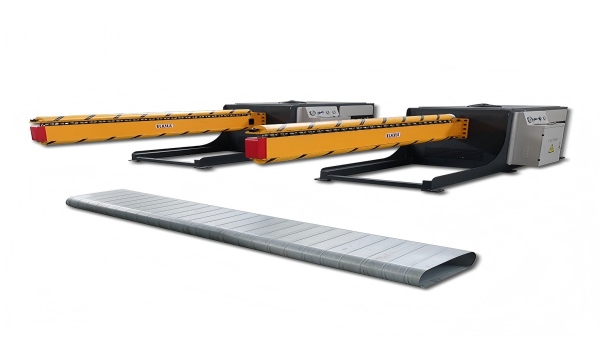
Production speed is easy to measure, but it does not tell the whole story. A higher operating speed is useful only when the machine can maintain acceptable quality and stable operation at that speed. If faster production leads to more rejected ducts, frequent stops, or additional adjustment, the apparent increase in output can be offset by material and labor losses.
For many manufacturers, efficiency improvements come from removing interruptions rather than simply increasing machine speed. Better production scheduling, consistent material preparation, repeatable setup procedures, and shorter changeovers can increase effective output while keeping material consumption under control.
Automation can also make a difference when production volumes justify it. A properly configured spiral duct machine can reduce repetitive manual intervention and maintain more consistent operating conditions during continuous production. This is particularly useful for manufacturers that regularly produce multiple duct sizes or large quantities of standard specifications.
When evaluating equipment, manufacturers should therefore look beyond the maximum production speed listed in a specification sheet. The more practical questions are how consistently the machine performs, how easily it can be adjusted, how well it handles the required material range, and how much operator intervention is needed during a normal production run.
For manufacturers reviewing different equipment configurations, the BLKMA product range provides a useful reference for understanding the types of machinery available for duct manufacturing and related production requirements.
Material utilization, production speed, and product quality are closely connected. Trying to maximize one of them in isolation can create problems elsewhere in the process. For example, reducing material consumption through overly narrow process margins may increase dimensional defects, while pushing production speed too far may result in more scrap and rework.
| Production factor | What can reduce efficiency | Practical focus |
|---|---|---|
| Material selection | Inconsistent thickness or unsuitable forming characteristics | Match material properties with the machine and application |
| Sheet preparation | Incorrect strip dimensions and unnecessary offcuts | Maintain accurate and consistent material dimensions |
| Machine settings | Unstable feeding or inconsistent forming | Adjust operating conditions to the material and duct specification |
| Production speed | Higher defect rates and unexpected interruptions | Maintain a stable speed that supports consistent output |
| Quality control | Rejected products and repeated rework | Identify defects early and address their underlying causes |
| Production planning | Frequent changeovers and unused material | Coordinate orders and material requirements more efficiently |
The right balance will vary according to the manufacturer's products and production environment. A high-volume producer may place greater emphasis on continuous operation, while a manufacturer handling many different duct specifications may benefit more from flexible setup and efficient changeovers.
This is where the capabilities of spiral duct machine manufacturers become relevant beyond the basic machine specifications. Equipment selection should take into account the actual production workflow, including material types, thickness ranges, duct diameters, expected production volume, quality requirements, and the level of automation required.
It is also worth considering technical support over the full service life of the equipment. A machine may perform well during initial production, but ongoing maintenance, troubleshooting, process adjustments, and spare-parts support can all influence long-term production efficiency. For a manufacturer planning a new line or upgrading existing equipment, discussing these requirements directly with the supplier can help establish whether the proposed machine configuration is appropriate for the intended application. Manufacturers can contact BLKMA to discuss their specific production conditions and equipment requirements.
Efficient spiral duct manufacturing is not simply a matter of using less material or running equipment faster. The stronger approach is to improve consistency throughout the production process. Suitable material, accurate sheet preparation, stable machine settings, controlled scrap, and realistic production speeds all contribute to turning a greater proportion of raw material into saleable ductwork.
A well-matched spiral duct machine can provide the stable forming conditions needed to support this process, but equipment selection should always be considered alongside the manufacturer's material range, product specifications, production volume, and quality expectations.
For companies comparing spiral duct machine manufacturers, looking at the complete production picture is more useful than focusing on a single specification such as maximum speed. Material utilization, operating stability, flexibility, changeover requirements, maintenance, and technical support all have a bearing on the actual efficiency of a spiral duct production line.
Material properties, sheet dimensions, cutting accuracy, machine settings, production planning, scrap, and rework all affect how efficiently raw material is converted into finished ducts.
Yes. Stable feeding and forming can reduce dimensional errors and defective sections, although material planning and proper sheet preparation are also essential.
No. If higher speed increases defects, downtime, or rework, the additional output may be offset by greater material and labor losses.
They should consider material compatibility, duct size range, forming stability, adjustment flexibility, automation, maintenance requirements, technical support, and the machine's suitability for their actual production workflow.
Manufacturers can improve material consistency, prepare strips accurately, optimize machine settings, maintain equipment properly, and identify recurring defects at the stage where they originate.
Material types and thicknesses, duct specifications, production volume, automation requirements, changeover frequency, available space, quality standards, and long-term equipment support should all be considered.

 Call us on:
  Email us:
  Dongcheng Industrial park, Bowang District of
FREE QUOTE
Dongcheng Industrial park, Bowang District of
FREE QUOTE
 English
 한국어
한국어 Deutsch
 Español
 italiano
 العربية
 Polska
 Svenska
 українська
 Malay
Malay