

In HVAC duct fabrication, flange quality directly affects how efficiently duct sections can be connected, installed, and maintained. As modern construction projects become larger and more complex, manufacturers face increasing pressure to produce duct components with higher accuracy, stronger connections, and shorter production cycles. Traditional manual flanging methods may struggle to maintain consistent results when production volumes increase or project requirements become more demanding.
A duct flange machine provides an effective solution by improving the precision, consistency, and efficiency of the flanging process. Through controlled mechanical forming and stable processing performance, modern flanging equipment helps HVAC manufacturers overcome common production challenges while creating more reliable duct connection systems. For companies seeking better fabrication performance, advanced duct flange technology has become an important part of modern HVAC manufacturing workflows.
Manual duct flanging requires operators to complete several important steps, including material positioning, flange forming, dimensional checking, and quality adjustment. Although experienced technicians can achieve acceptable results, maintaining the same flange quality across high-volume production can be difficult.
One major challenge is production consistency. Different operators may apply different levels of force or follow slightly different working methods, which can result in variations in flange shape and size. When multiple duct sections are assembled into a complete HVAC system, these differences may create alignment problems and require additional adjustment during installation.
Manual fabrication also becomes more challenging when manufacturers need to support large commercial buildings, industrial facilities, and complex ventilation projects. These applications often involve a significant number of duct components, making it harder to maintain stable quality while meeting strict delivery schedules.
A modern duct flange machine helps address these limitations by creating a more controlled and repeatable flanging process. Instead of depending entirely on individual operator techniques, manufacturers can use automated equipment to achieve more consistent flange results and improve overall production reliability.
Accurate flange dimensions are essential for smooth HVAC duct assembly. Properly formed flanges allow duct sections to connect more efficiently, improve sealing performance, and reduce installation difficulties. However, achieving precise dimensions consistently can be challenging when using traditional manual methods.
During manual flanging operations, factors such as measurement accuracy, material positioning, and operator experience can influence the final dimensions. Even small differences between duct components may become noticeable when multiple sections need to be connected within a larger ventilation system.
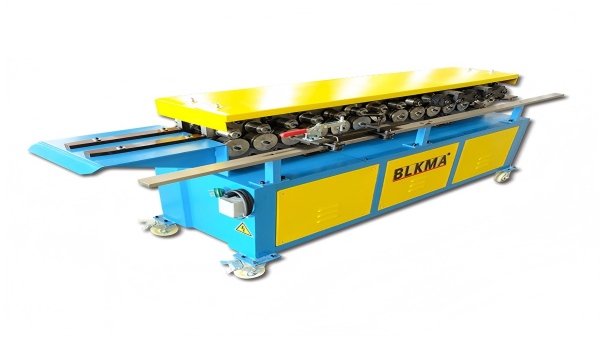
A duct flange machine improves dimensional stability through precise mechanical control. The equipment maintains consistent forming conditions, allowing manufacturers to produce duct flanges with more uniform specifications across different production batches.
For HVAC manufacturers, better flange accuracy means fewer adjustments during assembly and improved coordination between fabricated components. This helps reduce installation challenges while supporting more efficient project execution.
| Flanging Process Aspect | Manual Duct Flanging | Duct Flange Machine Processing |
|---|---|---|
| Flange Quality Consistency | Results may vary depending on operator skills and working methods | Provides stable and repeatable flange formation |
| Dimensional Accuracy | Requires frequent manual measurement and correction | Maintains more consistent flange specifications |
| Production Speed | Limited by manual processing capacity | Supports faster and more efficient fabrication |
| Labor Requirements | Requires more physical effort and repetitive work | Reduces manual workload through machine processing |
| Production Flexibility | Adjustments may require additional preparation | Adapts more easily to different fabrication needs |
Production efficiency has become a critical factor in HVAC manufacturing. Construction schedules are often closely managed, and delays in duct fabrication can affect installation progress. Since flanging is a necessary step in preparing duct connections, improving this operation can significantly influence overall manufacturing efficiency.
Traditional manual flanging requires workers to complete each stage individually, which can slow production when large quantities of duct components are required. Increasing output often means adding more labor resources or extending production time.
A duct flange machine helps reduce these challenges by streamlining the forming process. Automated operation allows manufacturers to complete flanging tasks more efficiently while maintaining consistent quality throughout production.
By improving processing speed and reducing repetitive manual steps, modern flanging equipment helps manufacturers create more predictable production schedules and respond more effectively to changing project demands.
Labor management is another important consideration for HVAC duct manufacturers. Flanging involves repetitive operations that require attention to detail and physical effort. As project requirements increase, depending entirely on manual labor may limit production capacity and efficiency.
A duct flange machine reduces the burden of repetitive fabrication tasks by allowing operators to focus on equipment monitoring, quality inspection, and production management. This creates a more efficient use of skilled labor resources.
Machine-based processing also improves workflow standardization. When fabrication quality depends heavily on individual operator experience, production results may vary between different shifts. Automated equipment helps manufacturers establish more stable processes and maintain consistent output.
For companies looking to improve manufacturing efficiency, adopting reliable flanging technology can help create a stronger production system while reducing unnecessary labor pressure.
The strength and reliability of HVAC duct connections depend heavily on the quality of the flanging process. A properly formed flange creates a stable connection point between duct sections, helping improve installation efficiency and supporting better long-term system performance.
When flange dimensions are inconsistent or the forming quality is unstable, installers may need to spend additional time adjusting connections or correcting alignment issues. These problems can increase labor requirements and affect project schedules.
A duct flange machine helps manufacturers produce more reliable flange structures by maintaining consistent forming pressure and processing accuracy. This allows duct components to achieve better connection compatibility and reduces the risk of quality variations during assembly.
More reliable flanging processes also support better quality control throughout HVAC duct production. Instead of managing large differences between manually produced components, manufacturers can establish a more predictable fabrication standard that improves overall product consistency.
HVAC fabrication requirements continue to change as building designs become more diverse. Commercial buildings, industrial facilities, and specialized construction projects may require different duct specifications, materials, and connection solutions. Manufacturers need equipment that can adapt to these variations while maintaining efficient production.
Traditional manual flanging methods may become less efficient when production requirements change frequently. Adjusting tools, preparing materials, and maintaining consistent quality across different duct types can increase production complexity.
Modern duct flange machine technology provides greater flexibility by allowing manufacturers to optimize processing according to different fabrication needs. Whether producing standard duct sections or handling projects with specific requirements, advanced equipment helps create a more adaptable production workflow.
BLKMA provides HVAC duct fabrication solutions designed to support efficient and reliable manufacturing processes. Manufacturers can explore suitable equipment options, including solutions for duct forming, processing, and production improvement, through the BLKMA product range to identify systems that better match their fabrication requirements.
Flexible equipment selection allows manufacturers to improve production efficiency while maintaining the ability to respond to future market changes. By combining reliable machine performance with appropriate fabrication planning, companies can create stronger and more sustainable manufacturing operations.
When evaluating a new flanging solution, manufacturers should consider production volume, material requirements, equipment compatibility, maintenance expectations, and long-term operational goals. BLKMA’s technical team can provide further assistance based on specific fabrication needs and help manufacturers identify suitable equipment solutions.
HVAC duct flanging is a critical manufacturing process that directly influences duct assembly efficiency, connection reliability, and final system performance. While traditional manual methods remain useful in some applications, they may face challenges related to production consistency, labor requirements, processing speed, and quality control.
A modern duct flange machine provides an effective solution by improving flange accuracy, reducing repetitive manual work, increasing production efficiency, and supporting more reliable duct connections. With advanced fabrication technology, HVAC manufacturers can overcome common flanging challenges and build more stable production workflows.
As HVAC projects continue to demand higher standards for accuracy and efficiency, investing in suitable flanging equipment has become an important strategy for manufacturers seeking long-term competitiveness. By choosing the right solution and optimizing production processes, companies can improve fabrication performance while delivering more reliable duct systems.
A duct flange machine is used to form and process duct flanges with improved accuracy, consistency, and production efficiency during HVAC duct fabrication.
High-quality flanges help improve duct assembly accuracy, connection strength, sealing performance, and installation efficiency.
It reduces manual processing steps, improves workflow speed, and helps manufacturers produce more consistent flange results.
Yes. Modern machines can support different duct sizes, materials, and production requirements through flexible processing capabilities.
Automated flanging reduces repetitive manual operations, allowing workers to focus on equipment management, inspection, and production control.
Manufacturers should evaluate production capacity, machine accuracy, material compatibility, maintenance needs, and technical support before selecting equipment.

 Call us on:
  Email us:
  Dongcheng Industrial park, Bowang District of
FREE QUOTE
Dongcheng Industrial park, Bowang District of
FREE QUOTE
 English
 한국어
한국어 Deutsch
 Español
 italiano
 العربية
 Polska
 Svenska
 українська
 Malay
Malay