

What separates a capable duct forming machine from one that performs reliably in daily production is often the consistency of the finished lock profile. A duct can meet the required dimensions when everything is freshly set, yet small variations in forming can appear as production continues. Once these variations begin to affect assembly, appearance, or downstream processing, the machine becomes part of the quality problem rather than simply the solution.
For this reason, assessing a duct lock forming machine should go beyond its basic forming capability. The more useful questions are whether it can maintain profile accuracy, remain stable during continuous operation, handle the intended sheet materials, and retain reliable forming performance as components are adjusted or maintained. These factors are especially important for manufacturers that need repeatable output rather than occasional high-quality samples.
A quality duct lock forming machine should therefore be viewed as part of the production system, where forming accuracy, mechanical stability, roller adjustment, material compatibility, maintenance, and downtime all contribute to long-term manufacturing performance. Looking at these factors together provides a more practical basis for evaluating equipment and matching it with actual production requirements.
Forming accuracy is one of the most direct ways to evaluate a duct lock forming machine. The purpose of the forming process is not simply to bend sheet metal into a general shape, but to create a lock profile that remains within the required geometry throughout production. If the profile changes from one duct section to another, assembly can become less predictable and operators may need additional adjustment.
Several elements contribute to forming consistency. The geometry of the forming rollers, material feeding position, machine alignment, and adjustment settings all influence how the sheet moves through the forming stages. When these elements work together correctly, each forming stage gradually develops the intended profile without introducing unnecessary deformation.
For manufacturers, checking a few finished samples is useful, but it does not provide the complete picture. A quality duct lock forming machine should demonstrate repeatable forming performance over a production run. If the first samples are accurate but the profile gradually changes, the machine may require closer attention to alignment, component condition, or material handling.
Repeatability also matters when production specifications change. A practical machine should allow operators to make controlled adjustments for different requirements without making the forming process unnecessarily difficult to reproduce. This is particularly important for manufacturers producing multiple duct specifications on the same production line.
Machine stability becomes more significant as production moves from short batches to continuous or high-volume operation. During extended production, the forming system must maintain consistent movement and positioning while sheet material continuously passes through the rollers. Small mechanical variations that are difficult to notice during short operation can become more apparent over time.
A stable duct lock forming machine should maintain the required forming conditions without frequent manual correction. Consistent material movement and mechanical operation help keep the lock profile uniform and reduce interruptions caused by repeated adjustment.
Continuous production also provides a better opportunity to evaluate the practical reliability of the equipment. Operators can observe whether the machine maintains its initial settings, whether the formed profile changes during operation, and whether adjustments become necessary more frequently as production continues.
High production volume does not automatically mean that a machine must operate at maximum speed at all times. A more useful consideration is whether the equipment can maintain the required forming quality at the production rate the manufacturer actually needs. Excessive speed without adequate forming stability can create more quality issues than it solves.
When comparing a quality duct lock forming machine, manufacturers should therefore consider continuous operating behavior alongside nominal production specifications. Stable forming, predictable adjustment, and controlled operation can have a greater impact on usable production capacity than speed alone.
Manufacturers reviewing different equipment configurations can explore the BLKMA product range to understand how duct fabrication machinery can fit into a broader HVAC sheet-metal production process. The appropriate configuration depends on the materials, duct specifications, production volume, and forming requirements involved.
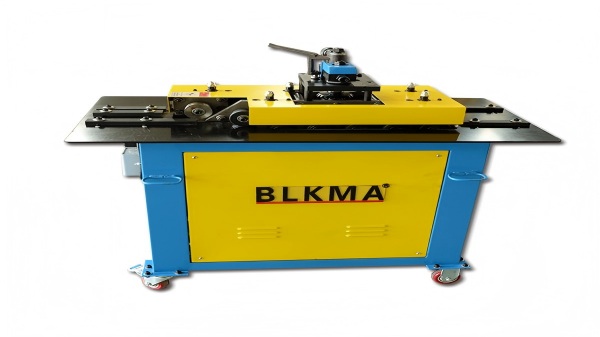
Forming rollers determine how the sheet is progressively shaped, which makes their alignment critical to lock profile quality. If rollers are not positioned correctly, the material may enter subsequent forming stages at an incorrect angle or position. The resulting error can then be carried through the rest of the forming process.
Correct alignment helps each roller perform its intended forming function. It also reduces the need for later rollers to compensate for variations introduced earlier in the process. When the entire roller system is properly coordinated, the lock profile can develop more gradually and consistently.
Adjustment flexibility is equally important. Different sheet thicknesses, material properties, and duct specifications may require changes to forming conditions. A duct lock forming machine should provide practical ways to make these adjustments while keeping the forming process stable.
| Performance factor | Possible production effect | What to evaluate |
|---|---|---|
| Roller alignment | Profile deviation or uneven forming | Alignment accuracy and adjustment stability |
| Roller condition | Gradual changes in lock profile | Surface condition, wear, and maintenance access |
| Material feeding | Profile offset or inconsistent forming | Feeding stability and guide positioning |
| Adjustment capability | Difficult changeover between specifications | Range and repeatability of machine adjustments |
| Mechanical stability | Variation during continuous production | Consistency of operation over extended runs |
When assessing a quality duct lock forming machine, manufacturers should therefore consider how easily the forming system can be aligned and adjusted, not just how the machine performs immediately after installation. Practical adjustment can make it easier to reproduce successful production settings and reduce dependence on trial-and-error setup.
The same forming settings do not necessarily produce the same result across different sheet materials. Material thickness, mechanical properties, surface condition, and flatness can influence how the sheet responds as it passes through the forming rollers.
This makes material compatibility an important part of machine evaluation. Manufacturers should compare the machine's intended processing range with the materials they actually use in production. A machine may be technically capable of forming a certain material, but consistent results depend on whether the equipment is properly configured for the relevant sheet specifications.
Material feeding also has a direct connection with forming performance. If the sheet enters the machine with inconsistent positioning, the forming rollers may create a profile that shifts from the intended geometry. Problems that appear to be related to the forming rollers can sometimes originate earlier in the material path.
For manufacturers working with several sheet specifications, adjustment flexibility becomes particularly useful. A duct lock forming machine should allow production settings to be adapted without making every material change a lengthy setup exercise.
A quality duct lock forming machine is therefore best evaluated against real production materials rather than generic machine capability alone. Reviewing actual sheet specifications and intended forming requirements with the equipment supplier can help manufacturers determine whether a machine configuration is appropriate for their production range.
Even a well-designed duct lock forming machine depends on proper maintenance to retain its forming performance. Rollers, guides, bearings, drive components, and other mechanical parts experience repeated movement during production. Wear may develop gradually and affect forming quality before a component fails completely.
For this reason, maintenance should not be treated only as a response to equipment breakdown. Regular inspection can help identify changes in roller condition, alignment, material guidance, and other areas that may influence the lock profile. Detecting these changes early can make corrective work more manageable.
Maintenance accessibility is also worth considering during equipment selection. Operators and maintenance personnel need practical access to components that require inspection or adjustment. If routine checks are unnecessarily complicated, maintenance may be delayed, increasing the possibility of gradual performance deterioration.
For a quality duct lock forming machine, long-term reliability is closely connected to how well the equipment can retain its original operating conditions. A machine that combines stable construction with practical adjustment and accessible maintenance can be easier to keep within consistent production conditions.
When a change in forming quality is noticed, manufacturers should avoid assuming that the problem is caused by one component. Roller alignment, material feeding, machine settings, and component wear can interact. Checking these factors together can help identify the actual source of variation rather than repeatedly correcting the finished profile.
The long-term value of a duct lock forming machine is ultimately reflected in how consistently it supports production. Good forming quality is important, but manufacturers also need equipment that can maintain that quality without creating unnecessary interruptions or repeated setup work.
Downtime does not always result from a major mechanical breakdown. Production can also lose time through repeated adjustments, unexpected profile variation, difficult changeovers, maintenance interruptions, or quality problems that require material to be reworked. These smaller disruptions can become significant when they occur repeatedly.
This is why production consistency should be considered together with machine reliability. A quality duct lock forming machine should be capable of maintaining stable forming conditions while allowing operators to respond to normal production changes in a controlled way.
Repeatable settings are particularly valuable for manufacturers running multiple specifications. Once a suitable configuration has been established, operators should be able to reproduce it with reasonable consistency rather than rebuilding the setup through repeated trial and error.
Long-term performance should also be evaluated in relation to the manufacturer's actual production environment. A machine designed around the right materials, duct specifications, operating conditions, and maintenance practices is more likely to deliver predictable results than equipment selected solely according to a single headline specification.
For manufacturers planning a new duct production line or considering equipment upgrades, discussing the intended materials, duct sizes, lock profiles, production requirements, and operating conditions with an experienced supplier can provide a more practical basis for machine selection. Manufacturers can contact BLKMA to discuss specific production requirements and potential equipment configurations.
Assessing a duct lock forming machine requires more than checking whether it can create the required lock profile. Forming accuracy, machine stability, roller alignment, adjustment capability, material compatibility, maintenance, and long-term production consistency all influence how effectively the equipment performs in a real manufacturing environment.
A quality duct lock forming machine should provide repeatable forming while remaining stable during continuous production. It should also give manufacturers practical control over adjustments and maintenance so that production conditions can be restored and reproduced when requirements change.
By evaluating the machine as part of the complete production process rather than as an isolated piece of equipment, manufacturers can make a more informed assessment of its suitability. The focus then shifts from short-term sample quality to something more valuable for daily manufacturing: consistent forming performance, manageable downtime, and reliable production over the long term.
Forming accuracy and lock profile consistency are key indicators because they show whether the machine can repeatedly produce the required profile.
Correct roller alignment helps the sheet move through each forming stage in the intended position and reduces profile variation.
Yes. Material thickness, mechanical properties, flatness, and surface condition can influence how the sheet responds during forming.
Manufacturers can observe whether forming quality remains consistent during continuous operation and whether frequent manual adjustments are required.
Wear or misalignment in rollers, guides, bearings, and other components can gradually affect forming quality, making regular inspection and maintenance important.
Consistent forming accuracy, stable operation, practical adjustment, material compatibility, accessible maintenance, and predictable long-term performance are all important factors.

 Call us on:
  Email us:
  Dongcheng Industrial park, Bowang District of
FREE QUOTE
Dongcheng Industrial park, Bowang District of
FREE QUOTE
 English
 한국어
한국어 Deutsch
 Español
 italiano
 العربية
 Polska
 Svenska
 українська
 Malay
Malay