

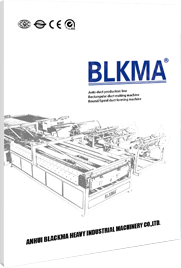
The demand for faster, more accurate, and more flexible HVAC systems is changing the way duct manufacturers approach production. Modern construction projects require duct components that can meet strict installation requirements while maintaining consistent quality across large-scale applications. However, traditional fabrication methods often rely heavily on manual operations, making it difficult to achieve stable output when production volumes increase.
Advanced HVAC duct fabrication equipment is helping manufacturers overcome these challenges by introducing higher levels of automation, precision control, and workflow efficiency. Instead of depending entirely on labor-intensive processes, modern production systems allow companies to improve manufacturing consistency while reducing unnecessary delays and resource consumption.
As HVAC manufacturers continue to face increasing expectations for quality and delivery speed, investing in reliable duct fabrication equipment has become an important step toward building more efficient and competitive production operations.
Traditional HVAC duct fabrication involves multiple manual steps, including material measurement, cutting, forming, and assembly preparation. While experienced workers can produce high-quality duct components, manual processes often require significant time and coordination, especially for large commercial and industrial projects.
One of the biggest challenges of manual fabrication is maintaining consistent productivity. Production speed may depend heavily on worker experience, available labor resources, and the complexity of each project. When manufacturers receive large orders or need to complete projects within shorter schedules, traditional methods may struggle to keep pace.
Modern duct fabrication equipment changes this production model by automating key fabrication processes. Automated systems can help manufacturers perform repeated operations with greater consistency, reducing the impact of human variation and creating a more predictable workflow.
With advanced HVAC duct fabrication equipment, manufacturers can improve production organization while allowing skilled workers to focus on quality control, equipment management, and process optimization. This transformation helps companies achieve higher efficiency without sacrificing product reliability.
Duct quality directly affects HVAC system performance, installation efficiency, and long-term reliability. Inaccurate dimensions, inconsistent forming, or uneven processing can create difficulties during assembly and increase the need for adjustments on construction sites.
Manual fabrication methods may introduce small variations because of differences in measurement techniques, operator experience, and production conditions. Although these variations may appear minor during individual operations, they can become more noticeable when multiple duct sections are connected together.
Advanced HVAC duct fabrication equipment improves quality consistency through precise automation technology. By maintaining controlled processing conditions, automated systems help manufacturers produce duct components with more stable dimensions and repeatable results.
This level of precision is particularly valuable for manufacturers handling complex HVAC projects where every component must fit accurately within a larger ventilation system. Reliable duct fabrication equipment supports better production control and helps reduce quality-related issues during installation.
| Production Factor | Traditional Manual Fabrication | Automated Duct Fabrication Equipment |
|---|---|---|
| Production Consistency | Quality may vary depending on operator skills and working conditions | Provides more stable and repeatable processing results |
| Processing Efficiency | Requires more manual operations and coordination | Improves workflow through automated production steps |
| Material Usage | Higher possibility of waste caused by manual errors | Supports better material control and utilization |
| Labor Requirements | Requires more repetitive manual effort | Reduces workload through automated processing |
| Production Flexibility | Changes may require additional preparation time | Adapts more easily to different HVAC requirements |
Production costs in HVAC manufacturing are influenced by several factors, including material consumption, labor requirements, processing time, and operational efficiency. Improving any of these areas can help manufacturers achieve better overall production performance.
Material waste is a common challenge in traditional fabrication environments. Manual cutting and forming processes may result in unnecessary material loss due to measurement errors or inefficient handling. Over time, these losses can increase manufacturing expenses and reduce production profitability.
Modern duct fabrication equipment helps address this challenge by improving processing accuracy and optimizing material usage. Automated systems provide better control over fabrication procedures, helping manufacturers reduce avoidable waste while improving production efficiency.
Workflow optimization is another important advantage. When different fabrication stages are better coordinated through automation, manufacturers can reduce unnecessary movement between operations and create smoother production schedules.
BLKMA provides HVAC fabrication solutions designed to support efficient duct production workflows. Manufacturers can explore different equipment options, including systems developed for duct processing and automated fabrication applications, through the BLKMA product range to find solutions that match their production needs.
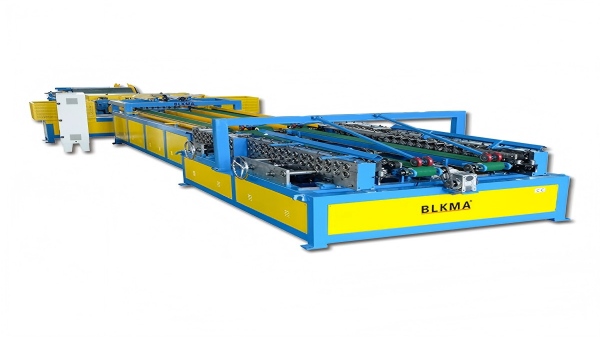
HVAC projects are becoming increasingly diverse, requiring manufacturers to produce duct systems for different building types, installation environments, and performance requirements. A production system that lacks flexibility may struggle when project specifications change.
Traditional fabrication methods often require additional preparation when switching between different duct sizes, materials, or configurations. This can reduce efficiency and make it more difficult for manufacturers to respond quickly to customer requirements.
Modern HVAC duct fabrication equipment provides greater adaptability by allowing manufacturers to handle different production requirements more efficiently. Flexible equipment design enables companies to adjust their workflow according to project demands while maintaining consistent quality.
For HVAC manufacturers serving commercial, industrial, and specialized applications, flexible duct fabrication equipment creates opportunities to improve responsiveness and expand production capabilities.
The future of HVAC manufacturing is moving toward smarter, more connected, and more efficient production environments. As manufacturers face increasing pressure to improve productivity and maintain consistent quality, automation technology is becoming an important part of modern duct fabrication strategies.
Advanced duct fabrication equipment supports this transition by improving production control and creating more organized manufacturing processes. Automated systems help manufacturers collect more reliable production information, reduce unnecessary manual adjustments, and improve overall workflow visibility.
Smart manufacturing does not simply mean adding automation to existing processes. It requires a complete improvement in how materials, equipment, and production planning work together. Modern HVAC duct fabrication equipment helps manufacturers build a stronger foundation for future improvements by providing stable performance and flexible production capabilities.
For HVAC companies planning long-term growth, choosing equipment that can adapt to future manufacturing trends is an important consideration. A reliable fabrication system can help manufacturers improve current operations while preparing for future production requirements.
Creating an efficient HVAC manufacturing system requires more than purchasing individual machines. Manufacturers need to consider how equipment integrates with production planning, workforce organization, quality management, and future expansion goals.
Automated duct fabrication equipment helps create a more balanced production environment by improving consistency, reducing repetitive tasks, and supporting better resource allocation. Instead of focusing only on increasing output speed, manufacturers can build workflows that deliver stable quality over the long term.
The right HVAC duct fabrication equipment can also improve operational flexibility. When production requirements change, manufacturers with adaptable systems can respond more efficiently without completely redesigning their fabrication processes.
BLKMA focuses on providing practical HVAC duct fabrication solutions that help manufacturers improve production efficiency and reliability. By combining equipment performance with application-focused engineering, BLKMA supports companies seeking better solutions for modern duct manufacturing challenges.
When manufacturers need guidance on selecting suitable equipment, BLKMA’s technical team can provide support based on production requirements, workflow conditions, and application needs to help identify appropriate fabrication solutions.
The development of automated HVAC manufacturing technology is changing how companies approach duct production. Traditional manual fabrication methods may face challenges related to labor requirements, production consistency, material usage, and changing project demands.
Advanced duct fabrication equipment and modern HVAC duct fabrication equipment provide manufacturers with effective ways to improve production efficiency, maintain higher quality standards, and create more flexible workflows. Through automation and precision control, companies can reduce production challenges while building stronger manufacturing capabilities.
Choosing the right equipment requires a clear understanding of current production needs and future business goals. By evaluating machine performance, flexibility, support services, and long-term value, HVAC manufacturers can make smarter investment decisions and develop more efficient production systems.
HVAC duct fabrication equipment is used to cut, form, process, and prepare duct components for HVAC systems with improved accuracy and efficiency.
Automated equipment reduces manual operations, improves processing consistency, and helps manufacturers create more efficient workflows.
Precision helps ensure accurate duct dimensions, smoother installation, better system performance, and fewer adjustments during assembly.
Yes. Modern equipment can adapt to different duct sizes, materials, and production needs, making it suitable for various HVAC applications.
It reduces costs by improving material usage, minimizing production errors, reducing repetitive labor, and increasing workflow efficiency.
Manufacturers should consider production capacity, equipment precision, flexibility, maintenance requirements, technical support, and future production goals.

 Call us on:
  Email us:
  Dongcheng Industrial park, Bowang District of
FREE QUOTE
Dongcheng Industrial park, Bowang District of
FREE QUOTE
 English
 한국어
한국어 Deutsch
 Español
 italiano
 العربية
 Polska
 Svenska
 українська
 Malay
Malay