

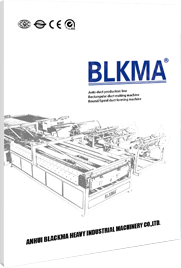
Choosing the right air duct fabrication machine starts with understanding what the production line actually needs. Duct size, sheet thickness, material type, production volume, forming accuracy, and the level of automation can all affect how well a machine performs in daily operation. A machine designed for high-volume standard duct production, for example, may not be the most practical option for a manufacturer handling different materials and frequent specification changes.
For this reason, the specifications of air duct fabrication machines should be evaluated in relation to the products being made and the way the production line operates. Processing range and accuracy determine what the machine can produce, while speed, control features, and material compatibility influence how efficiently it can do so. Looking at these factors together makes it easier to select a duct machine that delivers consistent results without paying for capabilities that do not match the actual production requirements.
The processing range is one of the first specifications to examine because it defines the types of duct components a machine can handle. Production requirements can vary considerably between manufacturers. Some focus mainly on standard rectangular HVAC ductwork, while others need to produce larger sections, different panel configurations, or a wider range of sheet thicknesses.
Sheet thickness deserves the same attention. A machine designed around a limited thickness range may work well for a specific product line but become restrictive when production requirements change. The appropriate thickness range depends on the duct application, structural requirements, material type, and fabrication method used by the manufacturer.
When evaluating a duct machine, manufacturers should compare the stated processing range with the dimensions and materials they actually use. A wider theoretical range is useful only when the machine can maintain stable processing and consistent results across the range that matters to the business.
Future production should also be considered. A manufacturer that expects to introduce larger duct sizes or different sheet thicknesses may benefit from selecting equipment with sufficient flexibility from the beginning. This can provide room for production expansion without requiring an immediate equipment replacement.
Production capacity means little if the resulting duct components require frequent correction. Accuracy and repeatability are therefore important when comparing air duct fabrication machines, especially for manufacturers working with standardized duct dimensions or projects where component fit needs to remain consistent.
During production, feeding, positioning, forming, and cutting all need to remain stable. Variations in any of these stages can lead to dimensional inconsistencies or components that require additional adjustment before assembly. When multiple parts are produced for the same project, even relatively small variations can make downstream assembly less efficient.
Rather than relying only on a general claim of high precision, manufacturers should consider how the machine maintains repeatable results. Mechanical construction, material feeding, positioning systems, forming components, and control functions all contribute to overall accuracy.
Ease of adjustment is also relevant. A machine may deliver consistent results under one set of conditions, but production environments often involve changes in duct size, sheet thickness, or material. A practical duct machine should allow operators to make these adjustments without unnecessarily complicating the production process.
For repeat orders, this consistency becomes even more important. When machine settings and operating conditions can be reproduced reliably, manufacturers can reduce the amount of manual correction needed between production batches and maintain a more predictable workflow.
Machine speed is often one of the first specifications buyers compare, but nominal speed does not necessarily represent usable production capacity. What matters in practice is how consistently a machine can maintain its output while producing components that meet the required quality standard.
A high-volume manufacturer may benefit from equipment designed for continuous operation and stable throughput. In contrast, a workshop handling smaller batches or a broad mix of duct specifications may place greater value on flexibility, setup time, and the ability to change production parameters efficiently.
The relationship between speed and quality should also be considered. Increasing operating speed can raise output when the machine remains stable, but if faster operation results in more defects, interruptions, or rework, the actual productivity gain may be much smaller than expected.
| Production requirement | Specifications to examine | Primary consideration |
|---|---|---|
| Small-batch production | Processing range, setup flexibility, control functions | Easy adjustment and versatility |
| Mixed duct specifications | Size range, material compatibility, changeover capability | Flexible production with consistent quality |
| Medium-volume production | Processing speed, repeatability, automation | Stable throughput with manageable operator input |
| High-volume production | Continuous operation, automation, production capacity | Consistent output and reduced interruptions |
| Specialized duct production | Material range, forming capability, machine configuration | Compatibility with specific product requirements |
This distinction is important when comparing air duct fabrication machines. A machine with a higher maximum speed is not automatically the better choice for a production environment where orders change frequently. The more relevant measure is whether the equipment can maintain useful output under the actual operating conditions of the factory.
Automation can have a significant effect on duct fabrication when the same operations are repeated throughout a production run. Automated feeding, positioning, cutting, forming, and other control functions can reduce repetitive manual work while helping maintain more consistent operating conditions.
However, more automation does not necessarily mean a better fit for every manufacturer. A highly automated system may be particularly useful for standardized, high-volume production, while a manufacturer producing many different duct specifications may need a control system that makes setup changes and adjustments straightforward.
The control interface is therefore worth examining alongside the automation functions themselves. Operators need to be able to enter production parameters accurately, monitor machine status, and make appropriate adjustments when material or product specifications change. Clear controls can help reduce setup errors and make repeat production easier to manage.
Integration with the rest of the production line is another consideration. A duct machine should fit the way material is prepared, processed, transferred, and assembled. Equipment that works smoothly within the existing workflow can provide greater practical value than a machine with advanced features that require major changes to the production process.
For manufacturers reviewing different equipment options, the BLKMA product range provides a reference point for exploring duct fabrication and HVAC sheet-metal processing equipment. Looking at machine configurations in relation to actual production requirements can make equipment comparisons more meaningful.
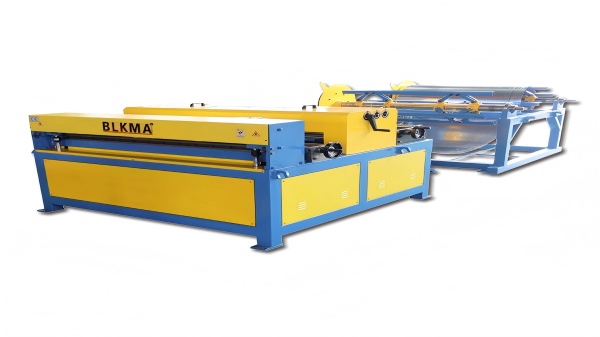
Air duct manufacturers may work with different sheet metals depending on the application. Galvanized steel is widely used in HVAC ductwork, while stainless steel and aluminum can be selected when specific corrosion resistance, weight, or environmental requirements need to be addressed.
These materials do not necessarily behave in the same way during processing. Differences in thickness, mechanical properties, surface condition, and material consistency can affect feeding, forming, and cutting. As a result, a machine configuration that performs well with one material may need different settings or components when another material is introduced.
Before purchasing air duct fabrication machines, manufacturers should identify the materials they currently process and consider whether their future product range is likely to expand. It is not enough to establish that a machine can technically process a particular sheet metal. The more useful question is whether it can process that material consistently across the thicknesses and duct dimensions required by the production line.
Machine configuration should be assessed in the same context. Feeding mechanisms, forming sections, tooling, control systems, and other components all contribute to how well the equipment handles the intended material range. Discussing actual material specifications with experienced air duct fabrication machines suppliers can help manufacturers avoid choosing equipment that appears suitable on paper but is less appropriate for their real production conditions.
The right machine specification ultimately comes from the production process rather than from one standout figure on a specification sheet. Before comparing models, manufacturers should have a clear understanding of the duct dimensions they produce, the sheet materials and thicknesses involved, expected production volume, frequency of product changes, and the amount of automation that would genuinely improve the workflow.
Current production requirements should be considered alongside realistic future plans. If a manufacturer expects to expand into new duct sizes or materials, additional processing flexibility may be worthwhile. On the other hand, buying substantially more capacity than the production line can use may increase equipment cost and complexity without delivering a corresponding operational benefit.
Setup and changeover requirements can be particularly important for manufacturers with a varied product mix. If duct specifications change frequently, the ability to adjust the machine efficiently may have a greater impact on daily productivity than a higher maximum processing speed.
Long-term support also deserves attention during equipment selection. Installation, operator training, maintenance, troubleshooting, and access to replacement components can all influence how effectively a machine performs over its working life. A technically capable machine is more useful when manufacturers can also obtain appropriate support as production conditions evolve.
For this reason, equipment discussions are more productive when they are based on actual production information. Manufacturers can contact BLKMA with details such as the materials they use, duct dimensions, sheet thicknesses, expected production volume, and automation requirements. This provides a more practical basis for discussing machine configurations than comparing isolated specifications.
Ultimately, processing range determines what the machine can handle, accuracy influences finished-product consistency, capacity affects usable output, automation shapes the workflow, and material compatibility determines how reliably different sheet metals can be processed. These factors should be considered together when selecting a duct machine.
Selecting an air duct fabrication machine should begin with the products being manufactured and the conditions of the production line. Duct dimensions, sheet thickness, material type, production volume, accuracy, automation, and changeover requirements all influence whether a particular machine will be a practical fit.
The goal is not necessarily to select the machine with the highest speed or widest specification range. What matters more is whether the equipment can maintain stable, repeatable production under the conditions in which it will actually be used. A well-matched duct machine can help manufacturers maintain consistent quality, reduce unnecessary manual intervention, and make better use of available production capacity.
When comparing air duct fabrication machines, manufacturers can make a more informed decision by looking at the complete production picture rather than focusing on a single specification. A balanced combination of processing capability, accuracy, capacity, automation, material compatibility, and long-term support provides a stronger foundation for both current production and future development.
Processing size, sheet thickness, accuracy, production capacity, automation, material compatibility, and machine configuration are the main specifications to evaluate.
No. Speed should be considered together with usable output, quality consistency, setup time, automation, and the production volume the machine needs to handle.
Sheet thickness affects how the material is processed and formed. The machine should support the thickness range required for current and reasonably anticipated production.
Automation can reduce repetitive manual operations and improve process consistency, particularly in repetitive or higher-volume production. Its value depends on how well it fits the actual workflow.
Some machines can process multiple sheet metals, but compatibility depends on material properties, thickness, machine configuration, and the specific fabrication process.
They should consider expected changes in duct sizes, materials, production volume, product mix, and automation requirements instead of evaluating the machine only against today's production needs.
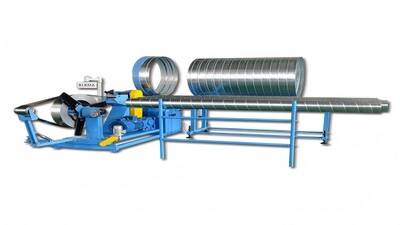

 Call us on:
  Email us:
  Dongcheng Industrial park, Bowang District of
FREE QUOTE
Dongcheng Industrial park, Bowang District of
FREE QUOTE
 English
 한국어
한국어 Deutsch
 Español
 italiano
 العربية
 Polska
 Svenska
 українська
 Malay
Malay