

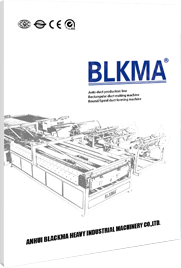
As HVAC systems become more complex, the challenge is no longer simply producing ductwork—it is producing accurate, efficient, and installation-ready duct systems at a faster pace. A single commercial building project may involve thousands of duct components that need to match precise specifications, maintain consistent quality, and fit seamlessly during installation. When fabrication processes rely too much on manual operations, small production issues can quickly become costly delays.
From inaccurate dimensions and excessive material waste to rising labor demands, HVAC manufacturers are facing increasing pressure to improve every stage of production. This is why advanced HVAC duct manufacturing machines are becoming an essential part of modern fabrication workflows. By combining automation, precision control, and flexible processing capabilities, today’s duct manufacturing equipment helps manufacturers overcome common production challenges while creating a more reliable path from raw material to finished ductwork.
Traditional HVAC duct fabrication has long depended on manual measurement, cutting, forming, and assembly. While experienced technicians can achieve good results, this approach becomes increasingly difficult when manufacturers need to handle large-scale production, strict dimensional requirements, and shorter project schedules.
One major limitation is production consistency. HVAC systems often contain hundreds or even thousands of connected duct sections, meaning each component must meet accurate specifications to ensure smooth installation. Small variations caused by manual measurement errors or inconsistent processing can lead to fitting problems, additional adjustment work, and unnecessary delays on construction sites.
Another challenge is the increasing complexity of modern HVAC designs. Commercial buildings, industrial facilities, and large public projects often require different duct sizes, configurations, and production approaches. Traditional fabrication methods may require significant manual intervention whenever production requirements change, reducing efficiency and increasing operational pressure.
Advanced HVAC duct manufacturing machines provide a more effective solution by automating key fabrication processes and improving production repeatability. With more precise control over cutting, forming, and processing operations, manufacturers can achieve higher consistency while reducing dependence on manual adjustments.
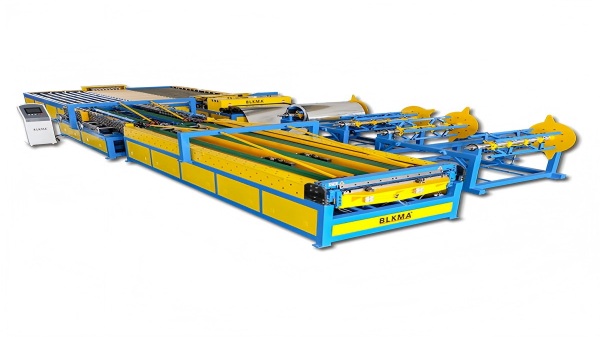
Precision is one of the most important requirements in HVAC duct manufacturing. Proper duct dimensions directly influence installation efficiency, sealing performance, and airflow effectiveness. However, maintaining the same level of accuracy across high-volume production can be challenging when fabrication relies mainly on manual processes.
During traditional fabrication, factors such as operator experience, measurement methods, and material positioning can affect final dimensions. Although these differences may appear minor during individual production steps, they can create significant challenges when multiple duct sections need to be assembled into a complete HVAC system.
Modern HVAC duct manufacturing machines help solve this issue through automated control systems and precise processing technology. These machines allow manufacturers to maintain consistent production parameters, improving the accuracy of cutting, forming, and shaping operations.
For companies producing large quantities of ductwork, reliable duct manufacturing equipment provides a more stable manufacturing foundation. Instead of depending entirely on individual operator skills, manufacturers can create repeatable processes that deliver consistent results across different production batches.
| Fabrication Aspect | Traditional Fabrication Methods | Advanced Duct Manufacturing Equipment |
|---|---|---|
| Dimensional Accuracy | May vary due to manual measurement and operator differences | Provides consistent processing through automated control |
| Production Efficiency | Requires more manual steps and longer processing time | Combines multiple operations for smoother workflows |
| Material Utilization | Higher risk of waste caused by inaccurate cutting | Improves material usage through precise processing |
| Production Flexibility | Adjustments may require additional manual work | Supports different duct specifications more efficiently |
| Quality Stability | Results may depend heavily on operator experience | Creates more predictable and repeatable output |
Material efficiency has become an important factor for HVAC manufacturers looking to control production costs and improve sustainability. Since sheet metal represents a significant portion of duct fabrication expenses, reducing unnecessary waste can have a direct impact on overall profitability.
In traditional production environments, material loss often occurs because of inaccurate measurements, inefficient cutting layouts, or repeated adjustments during fabrication. These issues not only increase material consumption but may also slow down production schedules.
Advanced duct manufacturing equipment improves material utilization by providing more accurate processing and better production control. Automated systems help manufacturers optimize cutting procedures, reduce avoidable errors, and make better use of raw materials.
For HVAC manufacturers, lower material waste means more than cost reduction. It also supports more efficient resource management and helps companies respond to growing demands for sustainable construction practices.
Manufacturers looking to improve fabrication efficiency can explore BLKMA’s HVAC production solutions, which are designed to support different duct processing requirements, from material preparation to automated fabrication workflows. These solutions help companies build more efficient production systems with dependable duct manufacturing equipment.
The availability of skilled labor has become an important consideration for many HVAC manufacturers. Duct fabrication requires workers who understand material handling, dimensional requirements, machine operation, and quality control. However, as project volumes increase and delivery schedules become shorter, relying only on manual labor can create limitations in production capacity.
Advanced HVAC duct manufacturing machines help manufacturers reduce the workload associated with repetitive fabrication tasks. Processes such as cutting, forming, and preparation can be completed with greater consistency, allowing operators to focus on production monitoring, inspection, and process improvement rather than spending most of their time on repetitive manual operations.
Automation also improves workflow coordination. In traditional fabrication environments, production efficiency may vary depending on the experience and working methods of different operators. Modern duct manufacturing equipment creates a more standardized process, helping manufacturers maintain stable output quality even when production demands increase.
For HVAC companies managing multiple construction projects, improving labor efficiency is not only about reducing workload. It is also about creating a production system that can respond faster to changing schedules while maintaining reliable fabrication standards.
Every HVAC project has its own design challenges. A high-rise commercial building may require a complex network of duct systems, while an industrial facility may need large quantities of heavy-duty ductwork. Manufacturers must therefore be able to adjust production processes according to different project requirements.
Traditional fabrication methods often become less efficient when production specifications change. Switching between different duct sizes, materials, or configurations may require additional setup time and manual adjustments, which can slow down the overall workflow.
Modern duct manufacturing equipment provides greater flexibility by allowing manufacturers to adapt production settings according to specific requirements. Whether producing standard rectangular ducts or handling more complex fabrication tasks, advanced equipment helps manufacturers respond more efficiently to project variations.
This flexibility is particularly valuable for HVAC manufacturers serving diverse markets. Instead of depending on separate manual processes for every project type, companies can use advanced fabrication systems to create a more adaptable production environment.
A stable production workflow is essential for achieving consistent HVAC duct quality. Delays caused by manual processing, material handling issues, or inconsistent fabrication results can affect project timelines and increase operating costs.
Modern duct manufacturing equipment improves workflow stability by connecting different stages of duct fabrication into a more organized production process. Automated systems help reduce unnecessary transfers between operations, improve production planning, and create smoother manufacturing cycles.
The right equipment selection also plays an important role in long-term efficiency. Manufacturers should evaluate factors such as production capacity, material compatibility, automation capabilities, maintenance requirements, and technical support before investing in new fabrication technology.
BLKMA provides HVAC duct fabrication solutions designed to help manufacturers improve production accuracy, efficiency, and reliability. By combining practical equipment design with industry-focused engineering experience, BLKMA supports companies looking to optimize their duct manufacturing processes and achieve more stable production results.
When manufacturers need guidance on selecting suitable fabrication solutions, BLKMA’s technical team can provide support based on specific production goals, workflow requirements, and application conditions. This helps companies identify equipment options that better match their operational needs.
Modern HVAC projects require duct fabrication processes that can deliver higher accuracy, stronger flexibility, and improved production efficiency. Traditional manual methods may struggle to meet these expectations due to challenges involving dimensional consistency, material waste, labor demands, and changing project requirements.
Advanced HVAC duct manufacturing machines and professional duct manufacturing equipment provide manufacturers with effective ways to improve production performance. By increasing precision, reducing waste, simplifying workflows, and supporting different duct designs, modern fabrication technology helps HVAC manufacturers create more reliable production systems.
As the demand for efficient HVAC solutions continues to grow, investing in advanced fabrication equipment has become an important step for manufacturers seeking long-term competitiveness. With the right technology and production strategy, companies can improve both manufacturing efficiency and the quality of finished duct systems.
HVAC duct manufacturing machines are used to cut, form, shape, and process sheet metal into finished duct components with improved accuracy and production efficiency.
Duct manufacturing equipment improves efficiency by reducing manual operations, increasing production consistency, and helping manufacturers complete fabrication tasks faster.
Accurate duct dimensions help ensure proper installation, better sealing performance, and more reliable airflow throughout HVAC systems.
Yes. Advanced machines can support different duct sizes, designs, and production needs by allowing manufacturers to adjust processing settings.
It reduces waste by improving cutting precision, optimizing material usage, and minimizing errors during the fabrication process.
Manufacturers should consider production capacity, automation features, material compatibility, maintenance requirements, and available technical support.

 Call us on:
  Email us:
  Dongcheng Industrial park, Bowang District of
FREE QUOTE
Dongcheng Industrial park, Bowang District of
FREE QUOTE
 English
 한국어
한국어 Deutsch
 Español
 italiano
 العربية
 Polska
 Svenska
 українська
 Malay
Malay